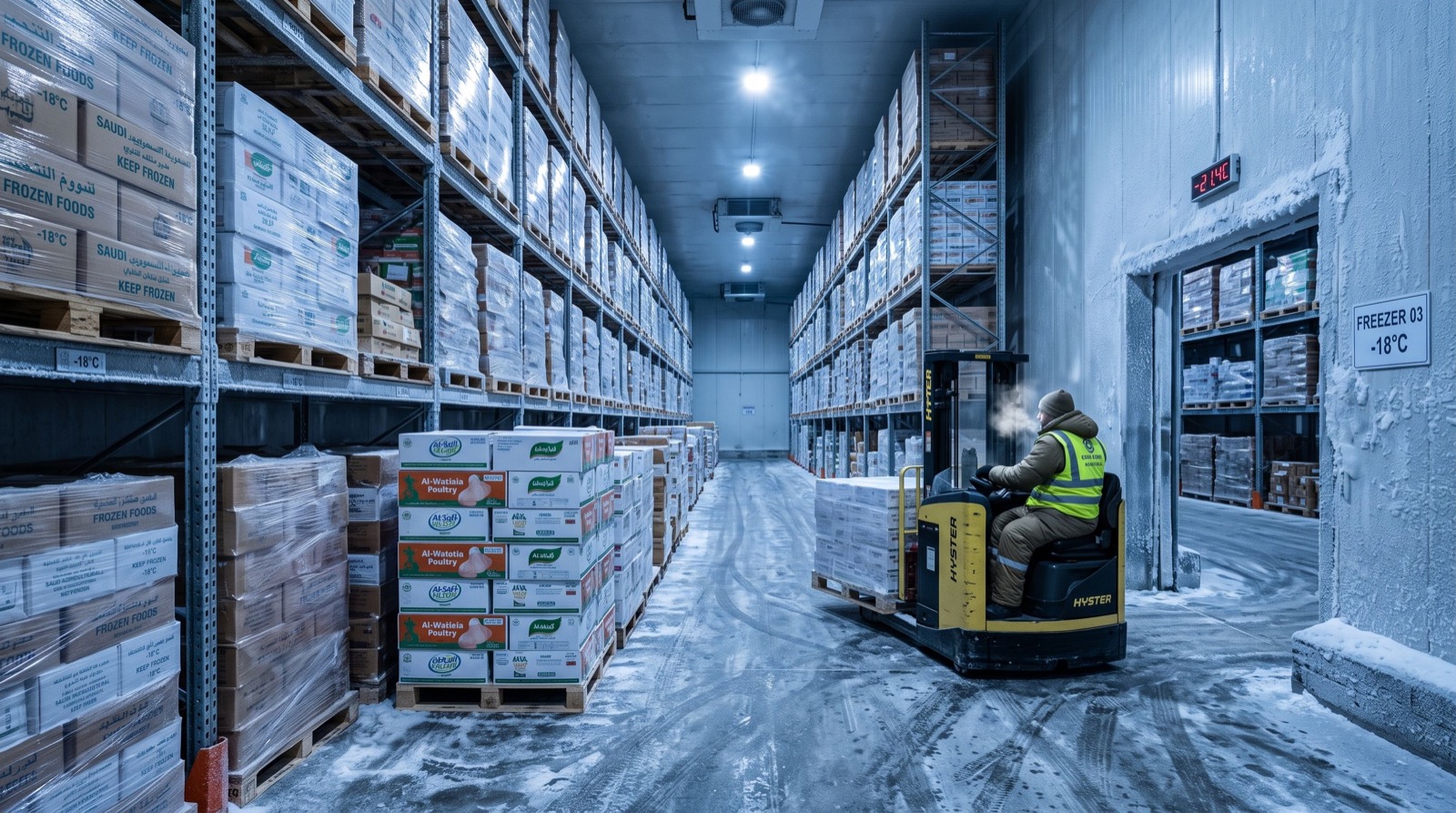
Frozen Storage in Saudi Arabia: 2026 Cold Chain Guide
Frozen storage in Saudi Arabia is the quiet backbone of the Kingdom’s growing food, pharmaceutical, and import economy — and in 2026, the margin for error has never been smaller. A single refrigeration failure or a few hours of temperature abuse can wipe out an entire shipment, along with the trust of the retailers or hospitals waiting on it.
For food distributors, restaurant chains, and import businesses, understanding how frozen and chilled storage actually differ — and when each one is required — is the difference between a cold chain that protects revenue and one that quietly leaks it.
Why the Cold Chain Is Under More Pressure Than Ever
Saudi Arabia’s food import volumes and domestic cold-chain logistics have expanded rapidly as consumer demand for frozen seafood, meat, dairy, and ready-to-eat meals keeps climbing. That growth is good for business, but it also multiplies the number of handoffs — port, warehouse, delivery truck, retail freezer — where a break in the chain can occur.
International cold chain standards consistently show that temperature deviation, not contamination at the source, is the single biggest cause of frozen food loss during distribution. The Food and Agriculture Organization publishes detailed cold chain guidance that underscores just how sensitive frozen and chilled goods are to even brief temperature excursions.
What Counts as “Frozen” vs “Chilled”?
Frozen storage typically holds products at or below −18°C, halting bacterial growth almost entirely. Chilled storage sits in a much narrower band, usually 0–8°C, which slows spoilage but does not stop it — meaning chilled goods have a defined, shorter shelf clock running the moment they arrive.
Who Actually Needs Frozen Storage in Saudi Arabia?
- Seafood importers and distributors
- Meat and poultry processors
- Frozen ready-meal and bakery suppliers
- Ice cream and dessert manufacturers
- Pharmaceutical cold-chain logistics providers
Businesses in any of these categories lose margin fast when they rely on undersized freezer rooms or inconsistent third-party cold storage. Purpose-built Frozen Storage in Saudi Arabia facilities are built specifically to hold sub-zero temperatures consistently at scale, which matters far more at peak season volume than it does with a handful of pallets.
Where Chilled Storage Fits Into the Same Supply Chain
Few businesses deal exclusively in frozen goods. Fresh dairy, produce, deli items, and many pharmaceuticals need chilled — not frozen — conditions, and freezing them would ruin the product just as badly as leaving them at room temperature. That’s why most serious cold chain operations in Saudi Arabia run frozen and chilled zones side by side rather than choosing one over the other.
Pairing frozen capacity with dedicated Chilled Storage in Saudi Arabia lets a single supply chain cover its entire perishable catalog without constantly transferring stock between mismatched facilities.
The Hidden Cost of Mixing Them Up
Storing chilled dairy in a freezer ruins texture and separates emulsions. Storing frozen seafood in chilled-only space shortens its usable life dramatically and risks bacterial growth. Getting the zoning wrong is as damaging as having no cold storage at all.
Frozen vs Chilled Storage: Quick Comparison
| Attribute | Frozen Storage | Chilled Storage |
|---|---|---|
| Typical temperature | −18°C or below | 0°C to 8°C |
| Microbial activity | Essentially halted | Slowed, not stopped |
| Typical products | Seafood, meat, ice cream | Dairy, produce, pharma |
| Shelf-life extension | Months to over a year | Days to a few weeks |
| Energy cost | Higher | Moderate |
How Do You Know When It’s Time to Outsource Cold Storage?
If you’re renting extra chest freezers, overbooking a single cold room during peak season, or paying overtime just to monitor temperature logs manually, that’s your signal. Outsourcing to a dedicated facility isn’t just about space — it’s about predictable compliance, backup power, and 24/7 monitoring that a growing business rarely has the bandwidth to run in-house.
The same logic applies off the warehouse floor. Just as a food business needs an experienced local team to actually grow its customer base through marketing, it needs an equally experienced local team running its cold chain — not a patchwork of makeshift solutions.
A Real-World Example: A Growing Seafood Distributor
Picture a small seafood distributor that started with two commercial chest freezers in a rented unit. For the first year, that setup was fine. By year two, order volume tripled during Ramadan and summer tourist season, and the freezers simply couldn’t keep pace — deliveries started arriving at a few degrees above spec, and retailers began sending stock back.
The fix wasn’t buying more chest freezers. It was moving into a dedicated frozen facility with monitored, redundant refrigeration and enough chilled capacity next door for the dairy and sauce lines the business had also started carrying. Within one peak season, rejected deliveries dropped to almost zero.
That pattern repeats across the industry: businesses outgrow improvised cold storage long before they admit it, usually right around the point where a single bad batch costs more than a year of outsourced storage fees would have.
Steps to Audit Your Current Cold Storage Setup
- Pull six months of temperature logs and flag every excursion above threshold.
- Separate your SKUs by true frozen vs chilled requirement — don’t guess.
- Calculate peak-season volume, not average monthly throughput.
- Confirm backup power and alarm response times with any provider.
- Check certifications against current food-safety standards for your category.
Frequently Asked Questions
What temperature should frozen storage in Saudi Arabia maintain?
Most frozen goods require −18°C or colder to remain safe and maintain quality over extended storage periods, consistent with international cold chain guidance.
Can frozen and chilled goods share the same storage facility?
Yes, as long as the facility maintains clearly separated, independently controlled zones. Mixing temperature zones without proper separation risks damaging both product types.
How often should cold storage temperature be monitored?
Continuous automated monitoring with alarm thresholds is the current best practice, replacing manual spot-checks that can miss brief but damaging excursions.
Is outsourced cold storage cheaper than building my own?
For most growing businesses, yes — outsourcing avoids heavy upfront refrigeration infrastructure costs and shifts maintenance, compliance, and monitoring onto a specialized provider.
What happens if a cold storage facility loses power?
Reputable facilities run backup generators and automated alarm systems that alert staff within minutes of any temperature drift, which is a key difference from a standalone commercial freezer with no failover plan.
Bringing It Together for 2026
Frozen storage in Saudi Arabia is only half the cold chain equation — chilled storage covers the rest, and most food businesses need both working in sync. As demand keeps rising through 2026, the businesses that treat cold storage as core infrastructure, not an afterthought, will be the ones that protect both their margins and their customers’ trust.